

How to start a pest control business: where to start and what you need.
It is the first question people ask when they are ready to go out on their own: where do I even start? The honest answer is licensing, and it usually takes longer than people expect. Here is the order that works, from your state license to your first recurring customers.

Nine steps, in the order that saves you money.
Most people start with the truck and the sprayer. Start with the license instead: it decides how soon you can legally take a paying job.
1. Find out what your state requires
Pest control is licensed by the state, and the rules differ a lot. Find your state pesticide regulatory agency and read its licensing pages before you spend anything.
2. Plan for the experience requirement
Many states want supervised experience before you can be the licensed professional behind a company. Florida asks for three years as a service employee on the usual route, and Texas for 12 of the past 24 months. If you do not have it yet, working for an established company first is part of the plan, not a detour.
3. Pick your first service
General household pest control is where most small companies start: it is recurring, it fits one truck, and it is one license category. Add termite, lawn or other categories once the first one pays.
4. Set up the business
Choose a business structure, register it with your state, and get an EIN from the IRS. Use the exact business name you will register with the pest control regulator, because some states require you to advertise and mark your vehicles only with that name.
5. Get the required insurance
States set minimum liability coverage for pest control businesses, and you file proof with your license application. Florida and Texas set different minimums; your state guide lists yours.
6. License the business
Apply for the business license with your certified professional named on it. In Florida and Texas you may not advertise or take work until it is issued.
7. Buy what the first routes need
A pump sprayer, a duster, a bait gun, personal protective equipment, and the few products you will use most, bought for the pests you will actually treat. Read every label: the label is the law for how a product may be used.
8. Set up your paperwork
A service agreement, an invoice that doubles as the service record, and a way to keep records for as long as your state requires.
9. Win your first recurring customers
Set up a Google Business Profile, ask every happy customer for a review, and knock on the neighbors around each job you do. Sell recurring service, not one-time sprays.
Price for the second visit, not just the first.
A pest control company is built on recurring service. One-time jobs pay the bills this week; recurring customers are what the business is worth.
An initial service
The first visit usually takes longer and uses more product than a regular visit, so price it on its own.
A recurring plan
Monthly, every two months or quarterly. Put it in a written agreement with the schedule, the price and how to cancel.
Tight routes
The money is in stops close together. A cheaper stop five minutes from your last one can beat a pricier one forty minutes away.
What new owners wish they had known.
- Buying equipment before the license is close
- Advertising before the business license is issued, which some states forbid
- Paying techs as 1099 contractors where the state requires employees
- Selling one-time sprays instead of recurring plans
- Keeping records on paper scraps that will not survive an inspection

Run the first route from your phone.
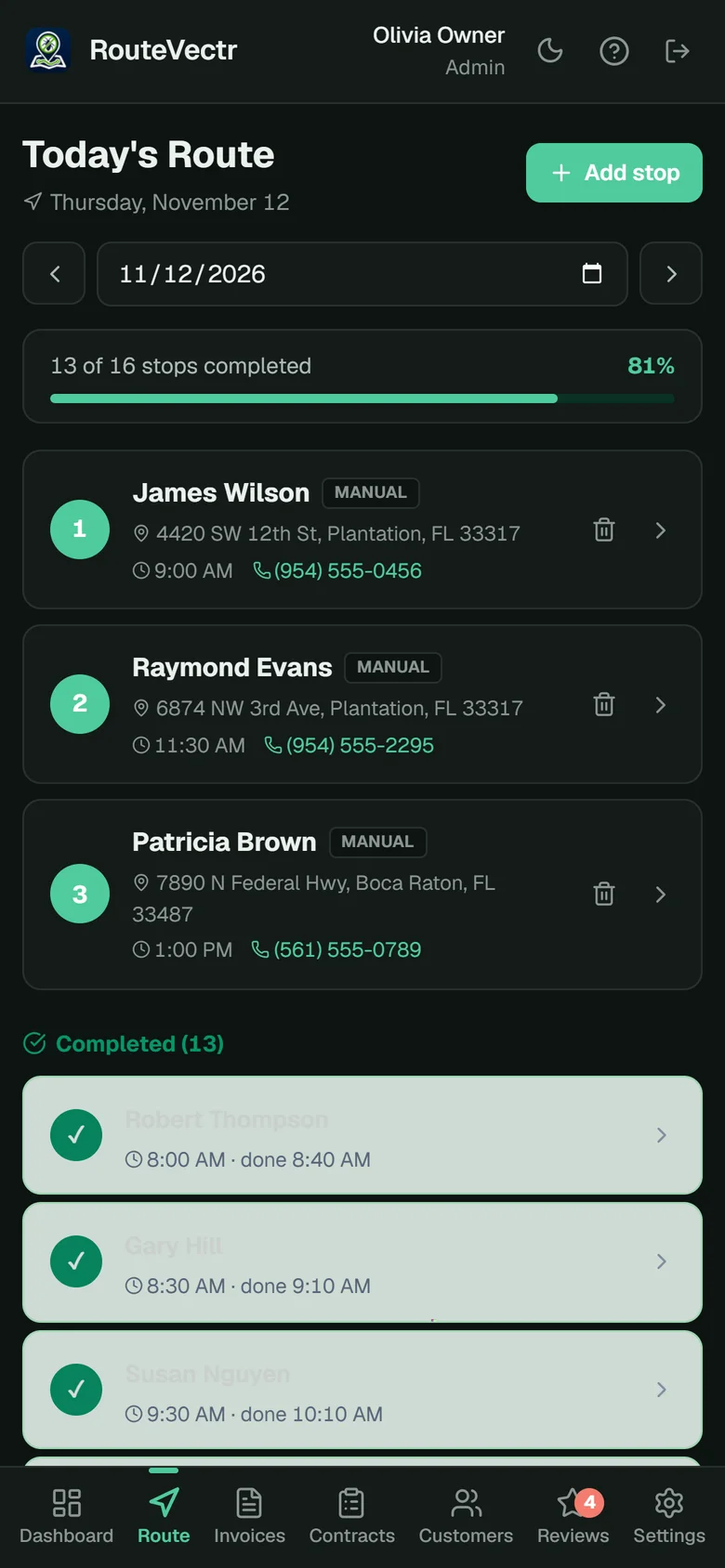
RouteVectr is built for exactly this stage: one truck becoming three. Routes, invoices with EPA records, contracts signed on the customer's phone and card payments at the door, on one flat monthly plan.
Join the waiting list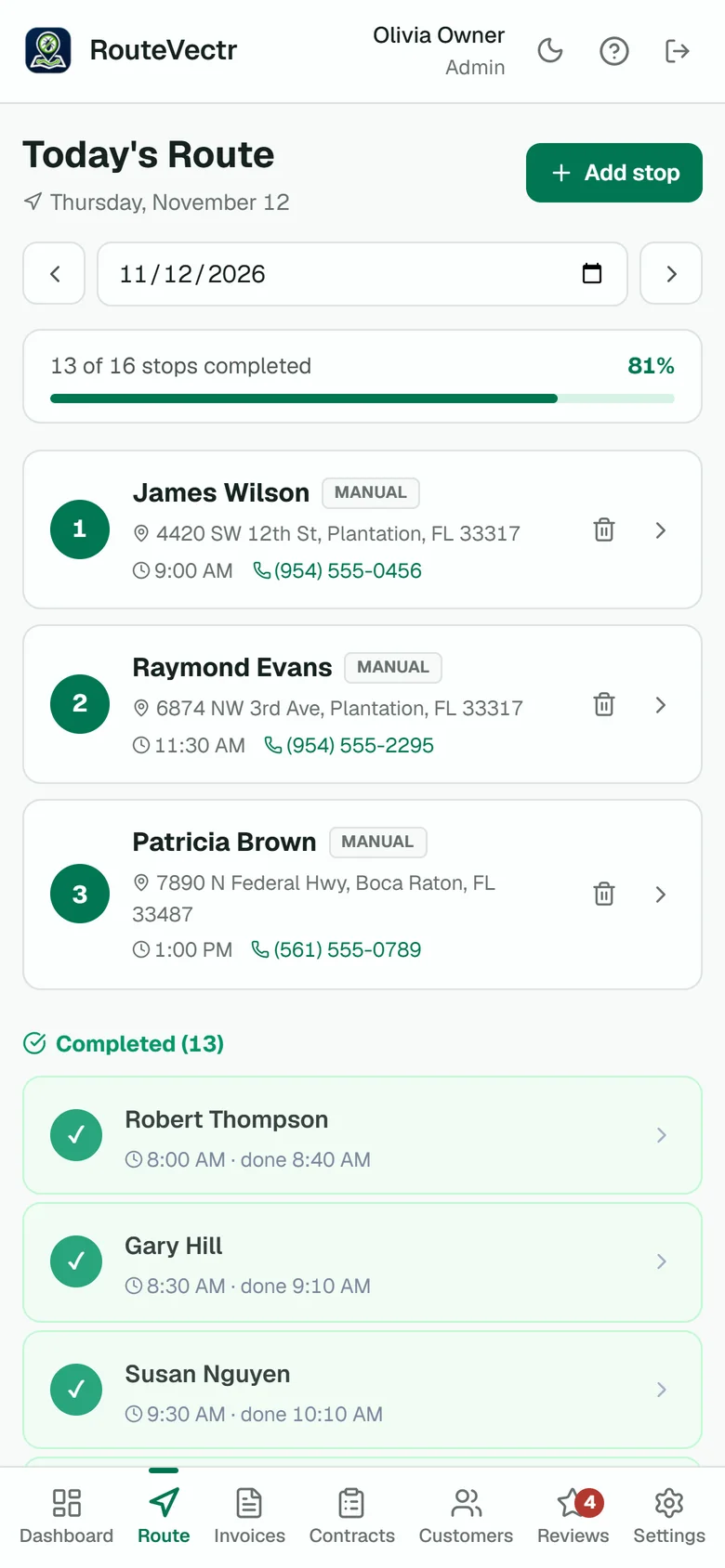
More from the resource library.
 Guides
Where AI belongs in a pest control business
Good jobs for AI, four it should never touch, copy-and-paste prompts and a plan for your first week.
Read the guide Guides
How to get more reviews for your pest control business
When to ask, exactly what to say, copy-and-paste messages and the rules that get reviews removed.
Read the guide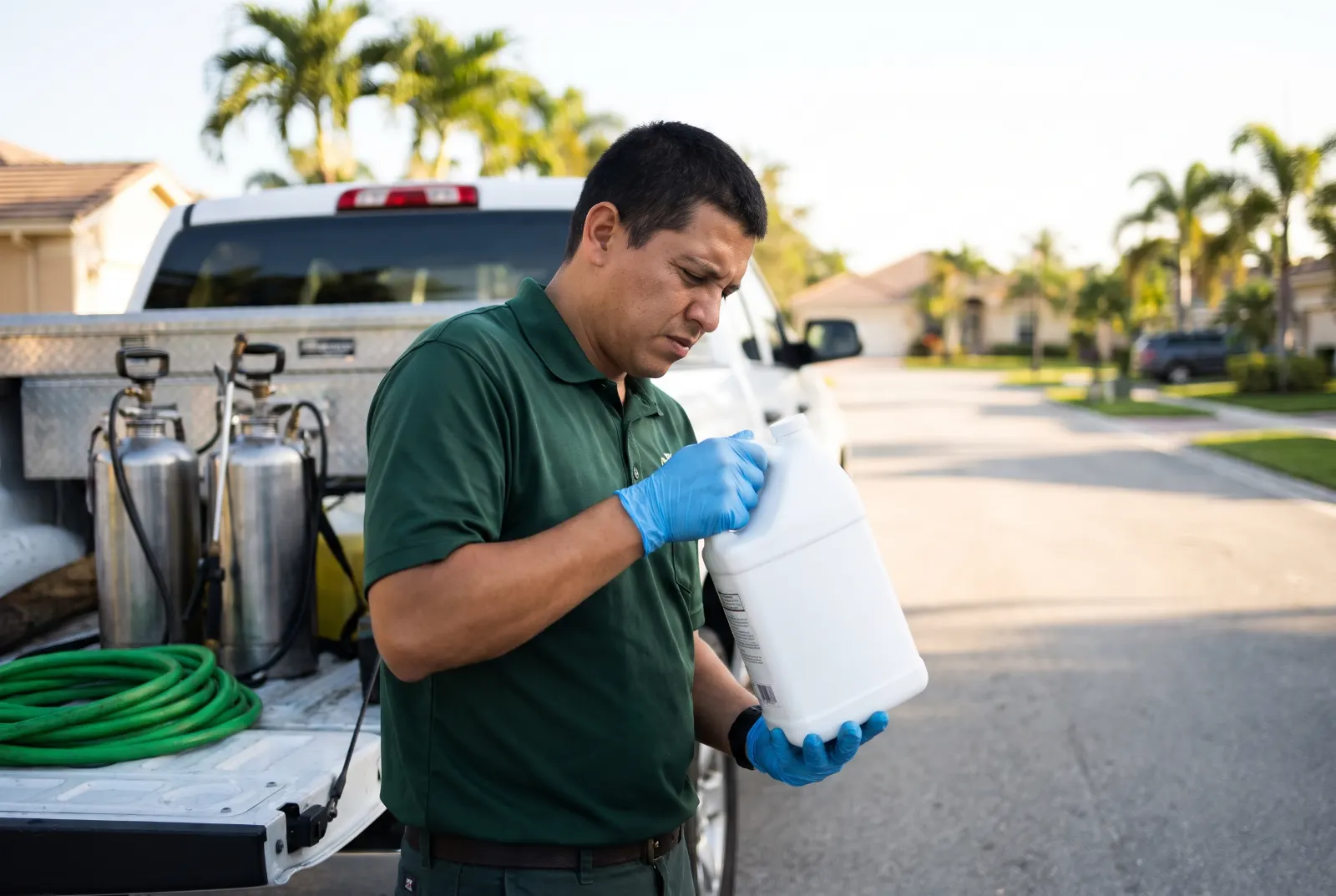 Guides
EPA registration numbers: what they mean
Why some numbers have three parts, how to look one up and why it belongs on every service record.
Read the guideSources
- NPIC: State pesticide regulatory agencies
- SBA: Choose a business structure
- SBA: Register your business
- IRS: Get an employer identification number
- EPA: Introduction to pesticide labels
- s. 482.132, Florida Statutes
- 4 TAC 7.126, Texas
Rules change and vary by state. This page is general information, not legal advice. Check your state's pesticide regulatory agency for the rules that apply to you.
Be first on the route when RouteVectr opens.
Join before launch and $97 a month is locked in for as long as you stay. You get your setup link on launch day. We set everything up for you, and your 14-day free trial starts when it is live.