

Where AI belongs in a pest control business, and where it doesn't.
AI can take a real share of the office work off an owner's evenings. It also has no business choosing a product, a rate or what goes on a service record. Here is how to tell the two apart, with prompts you can copy and a plan for your first week.

About a third of operators use AI now.
In FieldRoutes' 2026 survey of 1,027 pest control and lawn care businesses, AI was the technology owners expected to pay off most: 40% picked it for the next one to three years. FieldRoutes 2026 Most of the ones holding back were not against it. They did not know where to start.
Good jobs for AI: the office work nobody has time for.
The operators FieldRoutes talked to use AI behind the scenes: keeping procedures current, pricing research, call summaries and coaching, routing, marketing, and turning meeting notes into next steps. FieldRoutes In a small company that looks like this.
Write down how you work
Turn what is in your head into a step-by-step procedure for a new tech: the walk-around, what to say at the door, what goes on the record.
Draft customer messages
Visit reminders, gate and pet requests, a calm reply to a callback request, a note for a customer who wants to cancel.
Make sense of your numbers
Paste last month's visits with the names taken out and ask for revenue by service type, the average ticket and anything that looks off.
Notes into a to-do list
Turn a messy meeting or a voice memo into tasks with an owner and a due date, so nothing from Monday's huddle gets lost.
Four prompts to try this week.
They work in ChatGPT, Gemini, Claude or Copilot. Fill in the brackets. Before you paste anything, take out customer names, addresses, phone numbers and card details.
Write a step-by-step procedure for a [quarterly general pest service] at a single-family home, for a technician in their first month. Use short numbered steps. Cover what to check before leaving the truck, what to say at the door, the inspection and what to write on the service record. Do not name any product, rate or mixing instruction. Where those go, write [PRODUCT AND RATE FROM THE LABEL].
Write a friendly text message under 300 characters reminding a customer about their pest control visit tomorrow between [8 and 10 a.m.]. Ask them to [unlock the side gate and keep pets inside]. Sign it from [Company]. No emojis.
Write a calm, short text reply to a customer who says they still see [roaches in the kitchen] [10] days after our visit. Thank them, say sorry, and offer a free return visit this week with two time options: [Wednesday morning] or [Thursday afternoon]. Do not explain why it happened and do not promise a result.
Here is last month's list of completed visits, with the service type and amount for each and customer details removed: [paste]. Total the revenue by service type, show the average ticket for each, and list anything that looks unusual. Show your math so I can check it.
Read every draft before it goes out. AI writes with confidence whether it is right or not, so the check is your job.
Four jobs to keep away from AI.
Every registered pesticide label says it is a violation of federal law to use the product in a manner inconsistent with its labeling. EPA puts it simply: the label is the law. EPA A chatbot has not read your label and does not answer for what goes on.
Products, rates and mixing
Take the product, the rate, the site and the mix from the current label, never from a chat. Cornell reports AI tools suggesting herbicides that were not registered for the crop in question. Cornell
The final pest ID
A photo tool is fine for a first guess from a customer's picture. The tech confirms on site before treating. Cornell found ChatGPT stating a plant biology fact that was simply wrong. Cornell
The service record
The record says what was actually applied, where and how much, with the EPA registration number. It comes from the tech and your product list, not from a guess.
Talking to customers alone
Plenty of operators keep AI out of customer conversations on purpose. One vice president told FieldRoutes she does not want anything customer-facing "for now or for the foreseeable future." FieldRoutes
Should an AI answer your phone?
Count before you buy. Most of the missed-call numbers online come from companies selling AI answering, so get your own: pull two weeks of call logs and count missed calls by hour. If they cluster at night, on weekends or while everyone is in a crawl space, some kind of answering, human or AI, will pay for itself. If you hardly miss any, spend the money elsewhere.
- Always keep a way to reach a person
- Tell it what it can never promise: prices, treatments, guarantees
- Listen to the first 20 calls yourself
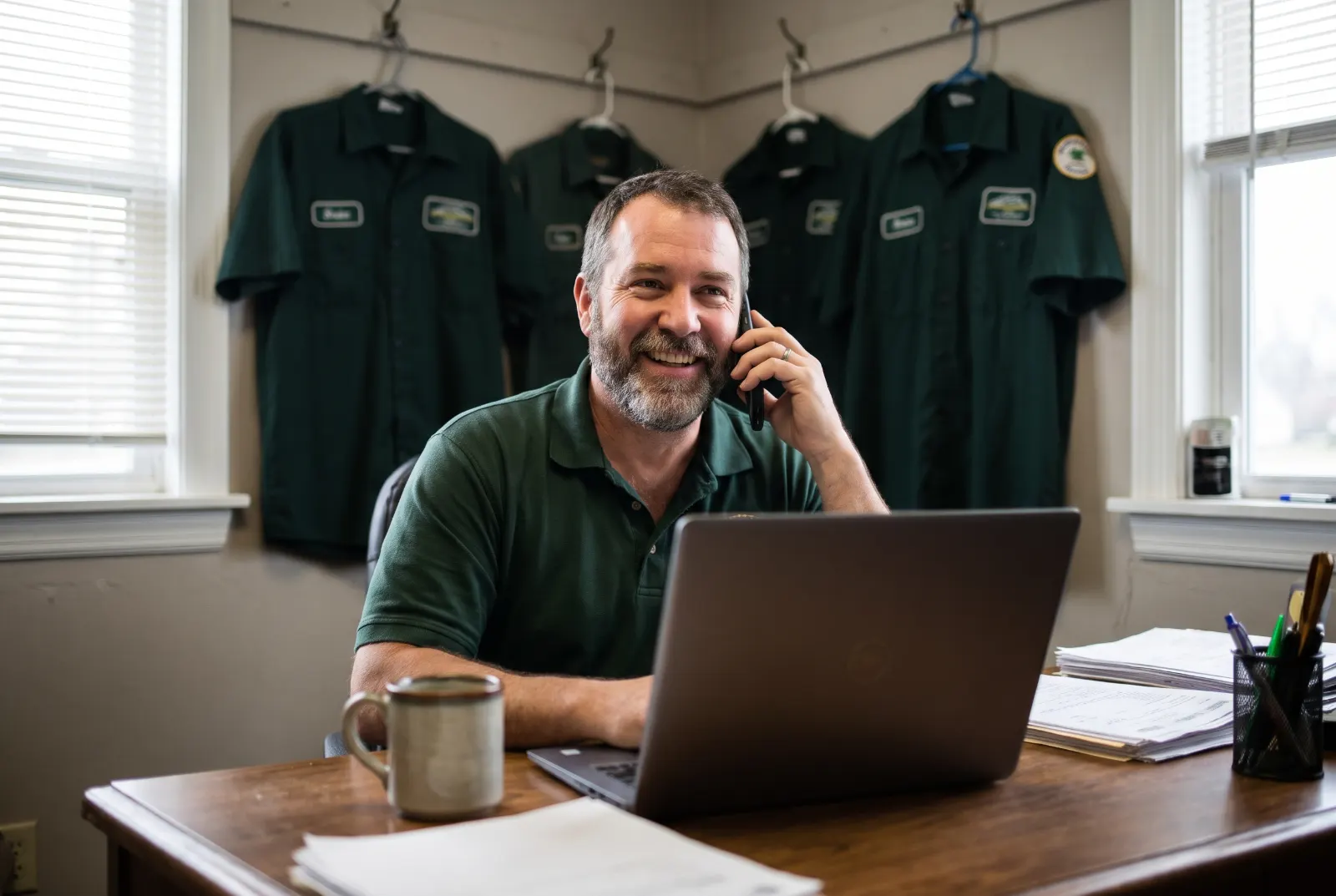
Customers are using AI to find you, too.
In its October 2026 results, Rollins, the parent company of Orkin, said residential customer acquisition "remained under pressure" and that it is moving money from "the traditional digital playbook" toward channels including "visibility in AI- and LLM-driven discovery." Rollins Q3 2026 What that means for a small company, and how to check whether AI recommends you, is covered in this guide from Digital Footprint Solutions, the team behind RouteVectr.

AI that fills in the invoice, not the label.
After a stop, the tech says what they treated, where and with which products. RouteVectr matches the pests, areas and products to your company's own lists and fills in the invoice. EPA numbers always come from your product list, never from the AI, and nothing is saved until the tech checks it.
See how it works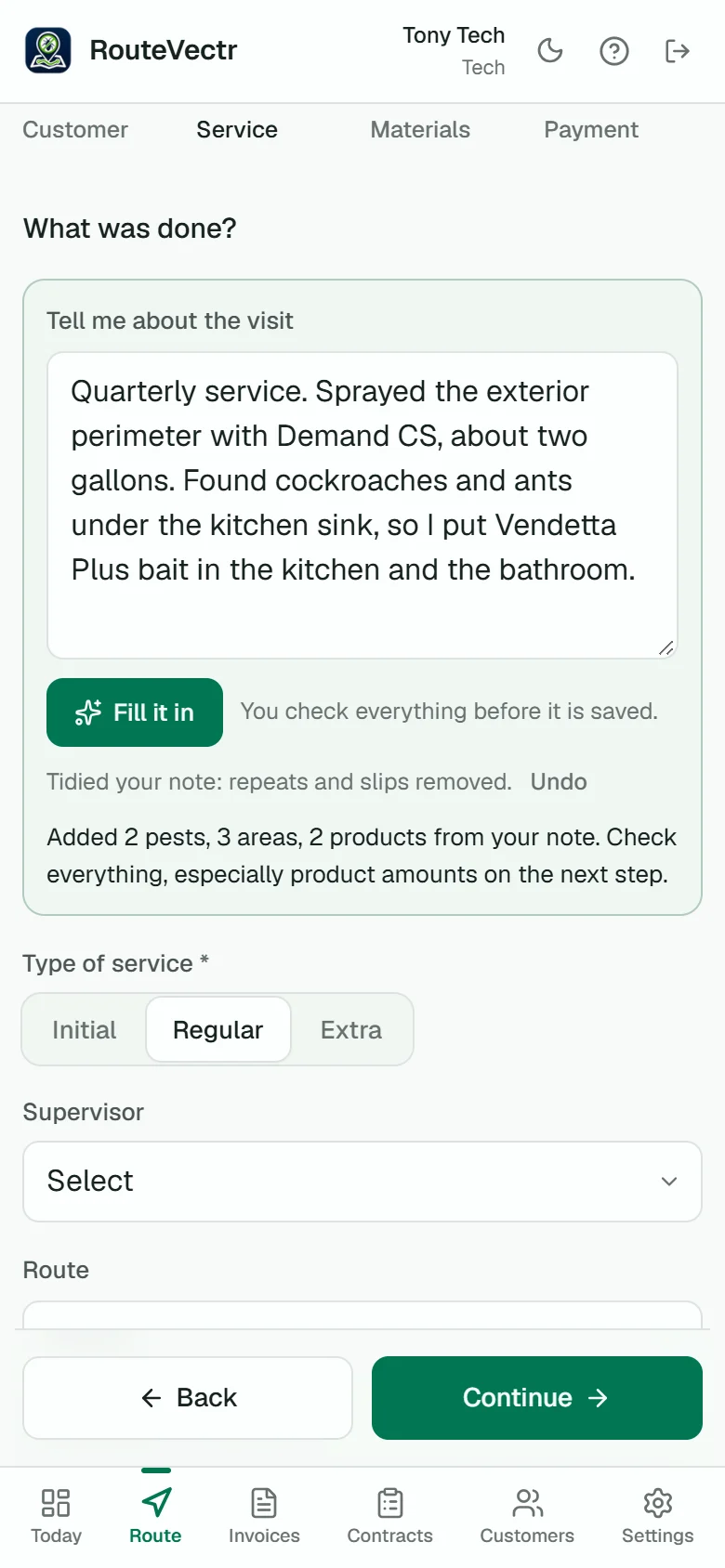
Start small, on paper first.
Day 1: Pick one job
Choose one office task that eats your evenings, such as writing up procedures or customer texts. Only that one.
Day 2: Write your no-go list
One page: products, rates, mixing, final pest ID, service records and customer data stay out of AI. Share it with the office.
Day 3: Run the prompts
Try the four prompts above. Keep what saves time, and fix or drop what does not.
Day 4: Count your missed calls
Two weeks of call logs, missed calls by hour. That number decides the phone question.
Day 5: Search for yourself
Ask ChatGPT and Google for the best pest control company in your town. Note whether you come up and what it says about you.
More from the resource library.
 Guides
How to get more reviews for your pest control business
When to ask, exactly what to say, copy-and-paste messages and the rules that get reviews removed.
Read the guide Guides
How to start a pest control business
Where to start and what you need, from the state license to your first recurring customers.
Read the guide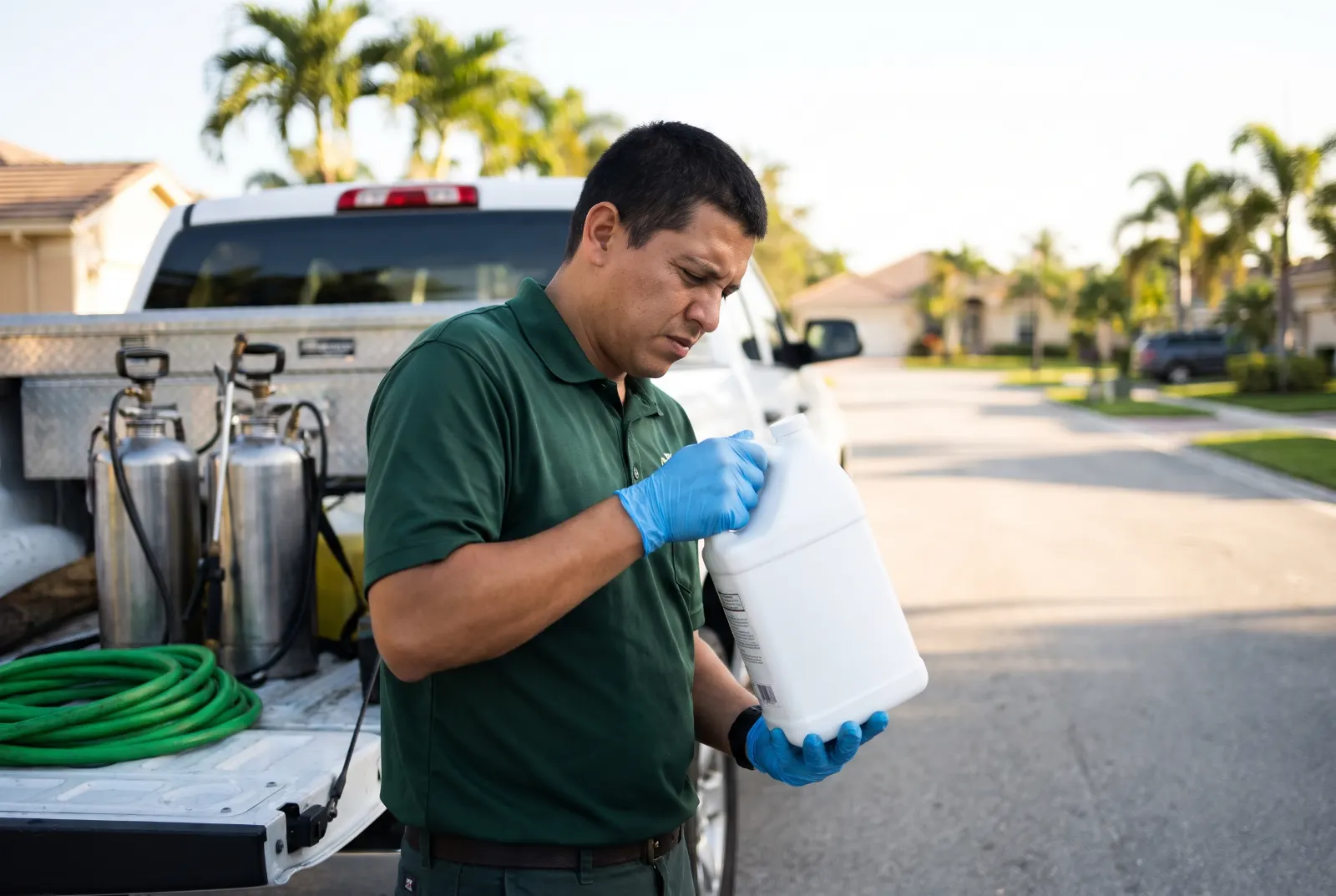 Guides
EPA registration numbers: what they mean
Why some numbers have three parts, how to look one up and why it belongs on every service record.
Read the guideSources
- FieldRoutes: 2026 Pest Control State of the Trades report announcement (July 2026)
- FieldRoutes: AI adoption in pest control rising. Now, where does it fit? (July 13, 2026)
- EPA: Introduction to pesticide labels
- Cornell University: Beware AI pest management recommendations (July 10, 2025)
- Rollins, Inc.: Third quarter 2026 financial results, Form 8-K exhibit 99.1 (Oct. 21, 2026)
Rules change and vary by state. This page is general information, not legal advice. Check your state's pesticide regulatory agency for the rules that apply to you.
Be first on the route when RouteVectr opens.
Join before launch and $97 a month is locked in for as long as you stay. You get your setup link on launch day. We set everything up for you, and your 14-day free trial starts when it is live.